News

How Does a Retaining Ring Groove Improve Bearing Stability?

2026-11-19 0 Leave me a message

A retaining ring groove is a practical design feature that helps secure a deep groove ball bearing against axial movement inside a housing. In this article, we explain how the groove improves bearing positioning, simplifies installation, and supports stable operation. Using our 6302RS Double Row Deep Groove Ball Bearings as a product reference, we also examine bearing dimensions, load ratings, material selection, and typical industrial applications.

Table of Contents

What Is a Retaining Ring Groove in a Bearing?

In bearing assemblies, maintaining the correct axial position is just as important as selecting the right bearing size. When a bearing is installed inside a compact housing, there may not be enough space for a separate shoulder or complicated fixing structure. This is where a retaining ring groove becomes useful.

A retaining ring groove is a machined recess on the outside diameter of the bearing's outer ring. It accommodates a retaining ring, also called a circlip or snap ring, which helps prevent the bearing from moving axially within its housing.

From our experience in bearing production at Hengji Bearing, this design is particularly useful for equipment manufacturers looking to simplify assembly while maintaining reliable bearing positioning. Instead of relying entirely on a large housing shoulder, the retaining ring provides an additional mechanical stop.

It is important to understand that the groove itself does not increase the bearing's internal load capacity. Its primary function is axial positioning and retention. Radial loads and rotational performance are still determined by the bearing's internal design, material, manufacturing accuracy, and operating conditions.

How Does a Retaining Ring Groove Improve Bearing Stability?

A retaining ring groove improves the stability of a bearing assembly mainly by controlling the axial position of the outer ring. This becomes important when equipment operates under vibration, repeated starting and stopping, or changing mechanical loads.

1. Preventing Unwanted Axial Movement

During operation, vibration and axial forces can gradually affect the position of a bearing if its outer ring is not properly secured. A retaining ring installed in the outer ring groove acts as a mechanical stop against the housing.

This arrangement helps maintain the bearing's intended position and reduces the risk of unwanted axial displacement. For compact motors, pumps, and transmission assemblies, stable positioning can make a noticeable difference in long-term operating reliability.

2. Simplifying Housing Design

Traditional bearing mounting arrangements may require additional housing shoulders, end covers, or fastening components. A bearing with a retaining ring groove can reduce the need for some of these structures.

This is particularly useful when equipment designers need to save installation space or reduce the number of assembly components. The housing must still provide the correct support and clearance for the retaining ring.

3. Improving Assembly Consistency

A properly dimensioned groove provides a defined position for the retaining ring. Once the ring is fully seated, it helps establish a repeatable axial location for the bearing.

For production lines assembling multiple units of the same equipment, this arrangement can make installation more straightforward. However, the groove dimensions, retaining ring size, and housing recess must match the actual bearing design.

4. Supporting Reliable Operation Under Vibration

In applications such as electric motors, fans, and conveyor equipment, continuous vibration can place additional demands on bearing mounting arrangements. A correctly installed retaining ring helps resist axial displacement and maintain the designed assembly position.

We recommend checking the retaining ring engagement and housing fit during assembly rather than assuming that the presence of a groove alone guarantees stability. Incorrect fitting or excessive clearance can still cause movement and premature wear.

6302RS Bearing Design and Technical Specifications

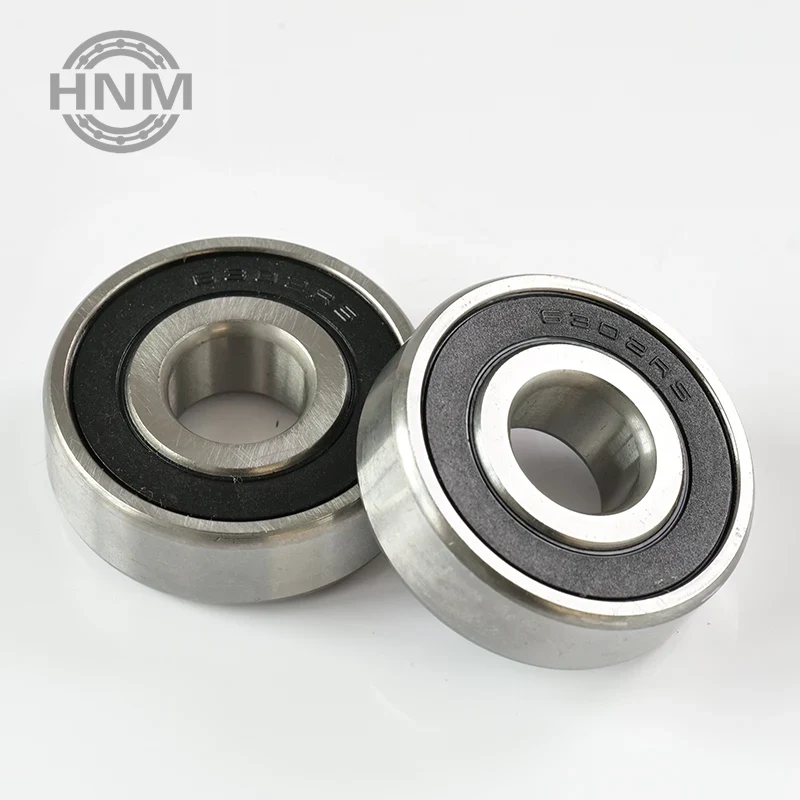
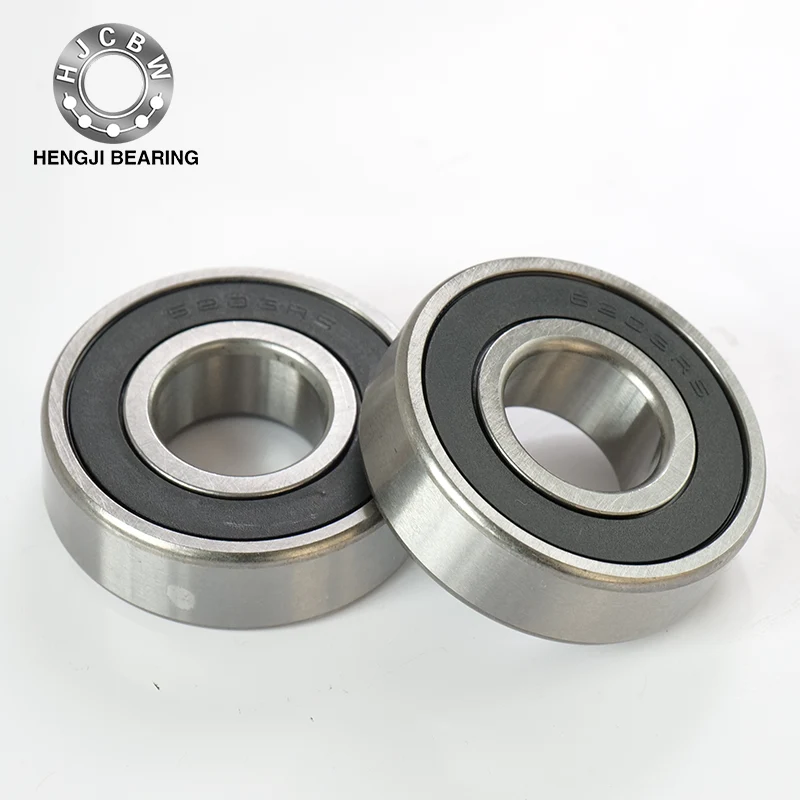
Our 6302RS Double Row Deep Groove Ball Bearings are designed for applications requiring reliable rotation, sealing protection, and stable installation. The product information includes a retaining ring groove structure on the outer ring, allowing a retaining ring to assist with axial positioning.

With a 15 mm bore, 42 mm outside diameter, and 13 mm width, this bearing fits a range of compact mechanical assemblies. Its sealed construction also helps reduce the entry of dust and moisture, making it suitable for equipment operating in moderately contaminated environments.


Technical Specifications

ParameterSpecification
Bearing Model6302RS
Inner Diameter15 mm / 0.5906 in
Outer Diameter42 mm / 1.6535 in
Width13 mm / 0.5118 in
Chamfer1 mm / 0.039 in
Dynamic Load Rating11,400 N
Static Load Rating5,430 N
Weight0.082 kg
Ring MaterialGCr15 Bearing Steel
Sealing TypeRS Rubber Contact Seal

The 11,400 N dynamic load rating and 5,430 N static load rating provide useful reference values for preliminary equipment selection. Actual bearing life depends on operating speed, load direction, lubrication, alignment, temperature, and installation conditions.

When selecting a replacement bearing, we suggest checking more than the 6302 model number. Bore diameter, outside diameter, width, sealing arrangement, internal clearance, and retaining ring configuration should all match the original equipment requirements.

How Do Materials and Manufacturing Processes Affect Performance?

A retaining ring groove helps with mounting, but the overall reliability of a bearing still depends heavily on its internal components and manufacturing quality.

GCr15 Bearing Steel

At Hengji Bearing, we use GCr15 high-carbon chromium bearing steel for bearing rings and rolling elements. After appropriate heat treatment, the material can achieve a hardness of approximately HRC 60–64, according to the specified production requirements.

This hardness range supports wear resistance and rolling contact fatigue performance. It is particularly important for bearings operating continuously in motors, pumps, and other rotating equipment.

Precision Grinding and Rolling Contact

The raceway surfaces and rolling elements need consistent geometry and surface finish to maintain smooth rotation. Precision grinding helps control dimensional accuracy and reduce surface irregularities that could affect friction and vibration.

We also pay attention to the cage structure. A stamped steel cage helps maintain the spacing and guidance of the steel balls during operation, contributing to consistent rolling movement.

RS Sealing Protection

The RS sealing design uses an oil-resistant rubber sealing layer, commonly based on NBR, to help prevent dust and moisture from entering the bearing interior. It also helps retain the internal grease.

This feature is useful in applications where bearings are exposed to airborne particles, humidity, or light industrial contamination. However, an RS contact seal should not be treated as a guarantee of complete waterproof performance under immersion or high-pressure washing.

Where Are Bearings with Retaining Ring Grooves Used?

Bearings with retaining ring grooves are often selected when the housing design requires compact axial positioning. Combined with the appropriate sealing arrangement, they can support a variety of industrial and household equipment.

ApplicationTypical EquipmentKey Requirement
Electric MotorsIndustrial motors, fan motorsStable positioning and smooth rotation
Power TransmissionReducers, transmission assembliesReliable radial support and axial retention
Household AppliancesWashing machines, vacuum cleanersCompact installation and contamination protection
Pump SystemsSmall water pumps and circulation pumpsRotational reliability and sealing protection
Industrial EquipmentConveyor rollers and agricultural machineryConsistent mounting under operating vibration

For example, in a compact fan motor, the outer ring needs to remain in its intended housing position while the shaft rotates. A suitable retaining ring arrangement can help prevent axial movement without requiring a complicated end-cover structure.

For washing machines and vacuum cleaners, the RS sealing arrangement provides additional protection against dust and moisture. The final bearing selection should still account for the equipment's actual speed, temperature, and load conditions.

Installation and Maintenance Considerations

Even a well-manufactured bearing can experience premature problems if it is installed incorrectly. For bearings with retaining ring grooves, we recommend paying particular attention to the following points.

Check the Groove and Retaining Ring

Before installation, inspect the groove for damage, burrs, or contamination. Confirm that the retaining ring matches the specified groove dimensions and can seat fully without excessive force.

Apply Force to the Correct Bearing Ring

Use a suitable press or installation tool. When fitting the bearing onto a shaft, apply force to the inner ring. When fitting it into a housing, apply force to the outer ring. Avoid transmitting installation force through the steel balls, as this can damage the raceways.

Confirm Axial Positioning

After installation, check that the retaining ring is fully engaged in its groove and that the bearing is positioned correctly against the housing. An improperly seated ring may fail to provide the intended axial retention.

Monitor Seals and Lubrication

Most sealed bearings are supplied with initial grease lubrication. Under normal specified operating conditions, additional grease is generally unnecessary. Inspect the rubber seals periodically for cracks, deformation, or signs of grease leakage.

Frequently Asked Questions

1. What is the main purpose of a retaining ring groove in a bearing?

Its main purpose is to accommodate a retaining ring that prevents unwanted axial movement of the bearing's outer ring within a housing. It also helps simplify bearing mounting arrangements and reduce the need for additional fixing components.

2. Does a retaining ring groove increase bearing load capacity?

No. The groove mainly provides axial positioning and retention. The bearing's radial and axial load capacity depends on its internal geometry, rolling elements, materials, and manufacturing quality. The retaining ring and housing must also be designed to withstand the expected axial forces.

3. What is the difference between 6302RS and 6302NR bearings?

In common bearing designation systems, RS generally identifies a rubber contact seal, while NR identifies a bearing with an outer ring groove and retaining ring. These suffixes describe different design features. A bearing requiring both sealing and a retaining ring should be confirmed against the manufacturer's specific designation and drawing.

4. Can a 6302RS bearing operate in dusty environments?

Yes. Its RS rubber contact seal helps reduce the entry of dust and other fine contaminants. It is suitable for many moderately dusty industrial applications, provided the operating temperature, speed, and contamination level remain within the bearing's design limits.

5. What should be checked before replacing a 6302 bearing?

Check the 15 mm bore, 42 mm outside diameter, and 13 mm width, as well as the sealing type, internal clearance, groove configuration, and load requirements. Matching only the basic model number may result in an unsuitable replacement.

6. Can Hengji Bearing provide customized bearing solutions?

Yes. Cixi Hengji Bearing Co., Ltd. specializes in small and medium-sized deep groove ball bearings, British bearings, thin-wall bearings, and non-standard bearing production. We have automatic bearing production lines and professional technical personnel to support customized product requirements, including non-standard specifications and application-related design discussions.

Conclusion

A retaining ring groove is a relatively small design feature, but it can make bearing installation more convenient and help maintain stable axial positioning. For compact motors, pumps, household appliances, and industrial machinery, this structure offers a practical solution when housing space and assembly efficiency are important.

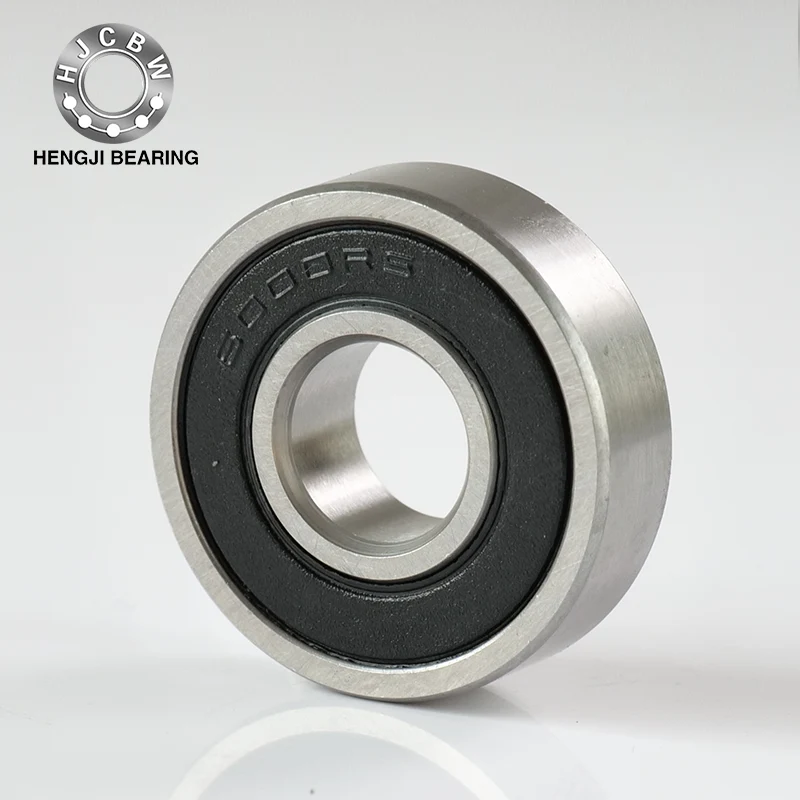
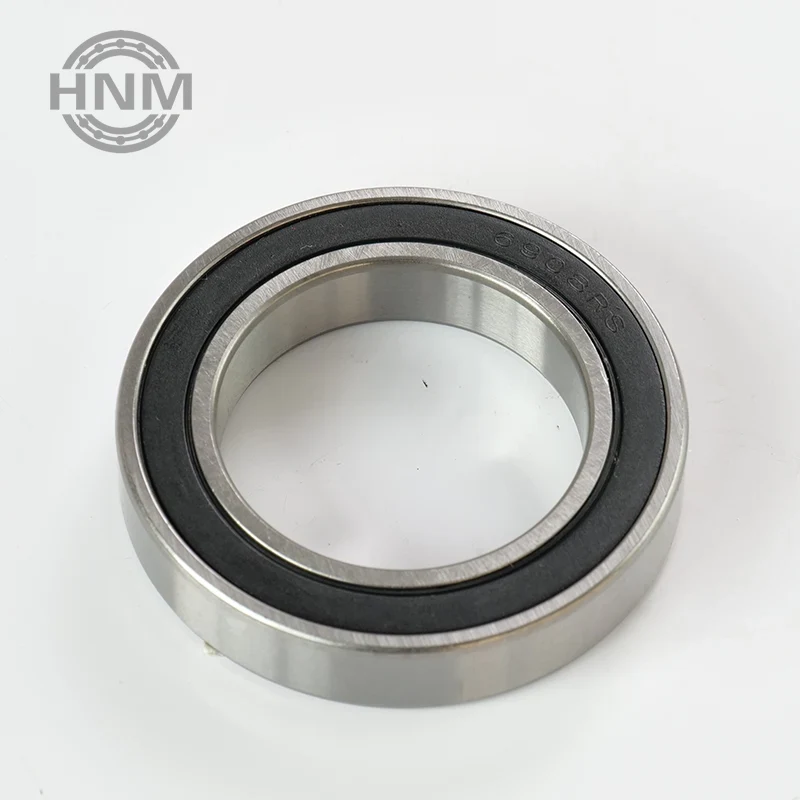
At Hengji Bearing, we focus on bearing precision, material quality, and consistent manufacturing to meet different equipment requirements. Our product range includes 6000, 6200, 6300, 6800, and 6900 series, as well as MR series, British bearings, and customized non-standard bearings.

If your application requires a standard deep groove ball bearing or a customized bearing configuration, you can contact Hengji Bearing to discuss dimensions, sealing options, load requirements, and production specifications.

Explore our Deep Groove Ball Bearings | Explore our Thin-Wall Bearings

Related News
Leave me a message
X
We use cookies to offer you a better browsing experience, analyze site traffic and personalize content. By using this site, you agree to our use of cookies. Privacy Policy
RejectAccept